
 reviews -







Knowing how often to clean carpets professionally depends on what happens on them. Pets, children, allergies, smoking and foot traffic each change the interval.
How often should household carpets be professionally cleaned?
A carpet's cleaning frequency follows its use, so no single date suits every room. Start from a baseline interval, then shorten it according to who lives in the home and how the carpet is soiled.
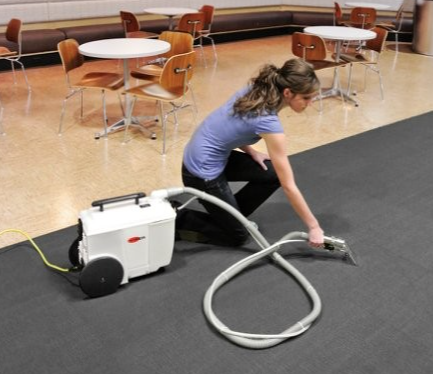
A starting interval for most homes
For an average household, a professional deep clean every 12–18 months is a reasonable starting point. It is not a fixed requirement. When you are deciding how often to clean carpets professionally at home, look at actual soiling first, then use these reference points:
- Moderate use, no pets: about every 12 months may suit the carpet.
- Little-used rooms: clean only when the condition of the carpet calls for it.
- Manufacturer's care instructions: these take precedence over any general interval, and so does the carpet fibre.
As a result, the rooms in one home do not need to share a schedule. A hallway and a guest bedroom can run on separate intervals, set by foot traffic and the people who use each room.
Pets and children
Occupants are the factor that most often shortens these intervals. A pet-owning home has a suggested starting range of 6–12 months, and some sources narrow it to 6–9 months. Paws bring in dirt, dander settles into the pile, and oils from a pet's skin attract more soil than vacuuming can lift.
Young children add their own kind of soiling. Floor play and frequent food or drink spills point to professional cleaning around every 6 months. Where both children and pets cause heavy soiling, one source suggests cleaning as often as every 3–4 months, depending on the carpet's condition.
Pet hair, muddy marks, urine, vomit and odours often need attention between scheduled cleans. For urine, extract the spill and rinse with cool water: the Carpet and Rug Institute advises against heat-based steam cleaning, which can set stains and smells. Once urine has reached the underlay or subfloor, repeated shampooing may not remove it.

Allergies and smoking
Health concerns shorten the cycle further. Industry sources suggest deep cleaning every 3–6 months for homes affected by significant allergies or smoking. Neither interval is an established medical requirement, so treat them as a basis for planning rather than a prescription.
Carpets hold pollen, dust-mite material and pet dander. Removing these accumulated allergens is worthwhile, but cleaning cannot stop new particles coming in or guarantee relief from respiratory symptoms. Regular dust removal between cleans still matters.
Smoke odours and residues cling to carpet fibres in the same way. In homes with smokers, the contamination also reaches upholstery and other surfaces, so cleaning the carpet alone will not clear it from the whole room.
When should the cleaning schedule change?
Busy premises and changing site conditions need a schedule based on what you can see on the floor: observed soiling decides the next clean, not the calendar alone.
Adjust intervals to foot traffic
High-traffic entrances and corridors collect soil faster than quiet rooms. In practice, splitting a site into zones gives each one an interval that matches its traffic:
- Busy areas: one general guide suggests professional cleaning every 6–12 months.
- Office entrances: a suggested programme for moderately busy offices cleans them quarterly rather than with the quieter areas.
- Wool carpets: WoolSafe's 2020 programme ranges from interim cleaning every 12 months and restorative cleaning every 18–24 months under light soiling, to interim cleaning every 1–2 months and restorative cleaning every 3 to 6 months under very heavy soiling.
Medium soiling sits between the two: interim cleaning every 6–12 months and restorative cleaning every 12 to 18 months. WoolSafe bases these intervals on the soiling it observes, not on the type of household, so a reception desk and a back office in the same building can therefore follow different cycles.

Inspect soil, wear and carpet type
Once zones are in place, inspection tells you when to bring a date forward. Darkened walkways, persistent odours, dull colour and rapid re-soiling after vacuuming are all reasons to reassess. Vacuum a traffic lane thoroughly first: if it improves substantially, removing dry soil is the immediate need. A flattened carpet pile, by contrast, points to wear that cleaning will not reverse.
Site conditions shift the date too. One source suggests professional cleaning every 6 to 9 months in dusty, polluted or humid surroundings. Near the coast, salt particles settle into the pile and add abrasive wear, while humidity slows drying and encourages odours. After each clean, note whether traffic lanes or odours return quickly and whether the carpet dried properly: that sets the next interval.
Carpet type changes both the interval and the safe method. Wool absorbs oils and moisture, and one source suggests a similar cycle for it with fibre-safe, pH-controlled methods, against every 9–12 months for nylon, polypropylene and polyester, which hide oily residue and grit. Light colours show stains sooner, while long pile holds dirt deeper. Before wet work, check the carpet fibres, backing, seams and colour stability: WoolSafe advises treating a mixed-fibre carpet according to its most sensitive component and using low-moisture methods on water-sensitive fibres.
Maintain carpets without unnecessary washing
Routine maintenance makes those checks less urgent. Vacuum household carpets at least weekly; WoolSafe recommends daily vacuuming for regularly trafficked areas, since vacuuming removes coarse grit while fine, oily soil needs a suitable cleaning solution. When spillages happen, lift any solids, blot the liquid from the edge towards the centre and use a carpet-compatible treatment, applied to a cloth rather than the carpet on wool. Careless spot cleaning can spread a stain or damage fibres, yet a single mark does not justify washing the whole room.
Whether it is bad to clean a carpet often depends on the method. Repeated unnecessary wet cleaning prolongs dampness, and excess detergent leaves a residue that attracts soil. The detail that matters here is drying: let a washed carpet dry completely before anyone walks on it. No universal drying time applies, since water applied, extraction, carpet construction and ventilation all play a part. Low-moisture interim cleaning brightens traffic lanes with less wetting, although WoolSafe notes it works near the surface rather than as a deep clean.
Recommended products
When do professional machines make sense?
Equipment sizes range from cordless spot cleaners to self-contained extractors, and each suits a different job and frequency.

Professional cleaning versus small machines
Spray extraction applies a cleaning solution and then recovers the loosened soil and moisture. It is often called steam cleaning, although not every extraction machine produces steam. The differences between the options lie in scale and expertise:
- Professional service: suits whole rooms and substantial soiling.
- Small household extractors: suit occasional, localised spills.
- Portable spot cleaners: suit small jobs on carpet stains.
Having carpets professionally cleaned adds a fibre assessment and specialist stain treatment. Professional carpet cleaning selects from carpet cleaning methods such as extraction, dry cleaning or encapsulation. However, no method can restore permanently worn fibres or guarantee the removal of every stain. DIY carpet cleaning with a household washer suits spot jobs, as small tanks make whole-house work slow.
Kärcher extractors for targeted work
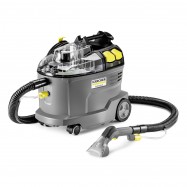
Between these two options sit compact professional machines. Hortech Cleaning presents the Kärcher Puzzi 10/1 spray-extraction machine for carpets and upholstery. It has a 10-litre fresh-water tank and a 9-litre recovery tank. Its stated maximum output is 20–25 m²/h.
The Puzzi 10/1 comes with a floor tool and an upholstery tool. Its flexible suction lip stays in contact with the surface at any tool angle, which helps it recover moisture after the cleaning pass. In use, make a slow wet pass forward and back, release the spray trigger, then add dry extraction passes rather than spraying until the water runs clear.
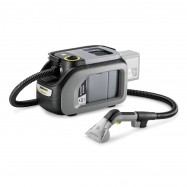
For smaller textile jobs, Hortech Cleaning offers the Puzzi 8/1 C for upholstery and spots, and the cordless 36 V Puzzi 2/1 Bp for removing stains. Both appear in the range of carpet and upholstery cleaners.
Viper extractors for larger carpeted areas
Larger, open carpeted areas call for a bigger machine. Hortech Cleaning presents the Viper CEX410 self-contained carpet extractor for regular carpet and textile-furniture maintenance. It has a 35-litre solution tank and a 23-litre recovery tank. Its cleaning width is 410 mm. It runs quietly enough for daytime use.
Larger tanks mean fewer refills, not necessarily a better clean. The CEX410 weighs 55 kg empty, so check before you buy whether a domestic setting can accommodate a machine of that size.

Carpet Extractors for Targeted Cleaning
Browse Kärcher and Viper carpet extractors online. Buy, hire or lease them, with UK delivery or click and collect from Holbeach.
Frequently Asked Questions
Yes, for whole rooms and substantial soiling. A professional service extracts across the entire carpet and adds a fibre assessment, a choice of method and specialist stain treatment. Even so, no extractor makes an unsuitable carpet safe to wet-clean, and worn fibres cannot be restored.
Suggested programmes are every 3–6 months for shops and hospitality venues, with monthly spot cleaning. For education areas, the suggestion is quarterly deep cleaning with monthly maintenance, which is not an infection-control requirement. Warehouse carpets are suggested for cleaning every 3–4 months, along with mat maintenance.
Where use is heavy, one source suggests professional cleaning every six months or between tenancies, depending on the carpet's condition.


