
 reviews -






A UK cleaning service taking on large sites needs equipment matched to each zone's floors, soil and access. A building's floor area alone is not enough to go on. The essential professional kit runs from vacuums and manual supplies to scrubber-driers, sweepers, carpet extractors and escalator cleaners. Buying it in the right order, and costing it over a whole contract in GBP, keeps the investment tied to the work that the site really needs.
What is a Scrubber Dryer?
A scrubber dryer does three jobs in one pass: it applies cleaning solution, scrubs the hard floor with a brush or pad, then recovers the dirty water through suction and a rubber squeegee blade at the rear.
What equipment does a large cleaning site need?
The answer starts on site rather than in a catalogue. For a cleaning service, every piece of cleaning equipment is specified for each zone in turn: its accessible area, floor finish, soil, obstacles, traffic and the cleaning window. The building's total area comes second.

Survey floors, soil and access
Once each zone has its own record, the machine choices narrow quickly. Note cleaning frequency and available time for every area. Then sort the floors into the categories that call for different machines:
- Carpet: office and corridor areas where routine dry vacuuming and periodic extraction work apply.
- Smooth hard floors: sealed or polished surfaces in receptions, retail and circulation areas.
- Textured hard floors: profiled or anti-slip finishes that hold soil and are harder to dry.
- Loading areas and escalators: zones with heavy debris, or specialist tread profiles, that need their own entry in the survey.
Access then decides what can physically reach each zone. The detail that matters here: measure the narrowest doors and aisles, turning space, lifts, thresholds, ramps and storage against the machine's overall width including the squeegee, and against its filled weight. Brush width alone tells you nothing about access.
Test the route and utilities
With access confirmed, time a representative route. Include preparation, turns, obstacles, refills, emptying, end-of-shift cleaning and charging. A UK warehouse-cleaning guide suggests practical coverage can fall 30–50% below theoretical output. Treat that as a rule of thumb rather than a fixed allowance, and compare your measured productive square metres per hour with the real cleaning window.
The timed route also shows where the utilities are. Before choosing a machine, map the sockets, safe cable routes, charging space, water fill points and authorised dirty-water disposal points. Alongside this, schedule dry-debris removal, wet scrubbing, spill recovery and carpet cleaning as separate cleaning tasks. Pressure washers cover suitable outdoor surfaces such as patios, driveways and walls.
Buy core machines and supplies first
Those separate tasks set the buying order. A practical first kit covers dry vacuuming and manual work at edges and on spills. Other machines are added as the survey justifies them, which makes this a decision sequence rather than a fixed shopping list:
- Scrubber-drier: added for extensive hard flooring.
- Sweeper: added where dry debris builds up, such as warehouses and loading bays.
- Escalator cleaner: added only when the contract and access arrangements warrant it.
Routine cleaning supplies complete the kit. Brooms and a dustpan deal with awkward edges, and a mop and bucket handle small hard-floor areas. A trolley moves bags, brushes and other cleaning tools between zones. Add microfibre cloths and a controlled set of chemicals matched to the soil and surface. Safety data sheets inform a site- and task-specific COSHH assessment, but they do not replace it.
Which hard-floor machines suit large sites?
Once the survey has identified large areas of hard floor, mops can no longer keep pace. A machine is needed for wet cleaning, and often a second one for dry debris. Each floor cleaner is chosen on measured conditions rather than on its headline output.

Choose a scrubber-drier for wet cleaning
A scrubber-drier does three jobs in one pass. It applies cleaning solutions, scrubs the hard floor with a brush or pad, then recovers the dirty water through suction and a rubber squeegee blade at the rear.
Since the machine does all three jobs at once, choosing between pedestrian and ride-on operation depends on several measurements. These are measured coverage, aisle width, turning circle, floor finish, tank capacity and battery runtime. Catalogue output alone is not a sound basis. Hortech Cleaning supplies a range of Kärcher walk-behind scrubber dryers, sold subject to a site survey.
A demonstration on site is also the time to check drying. Run the machine on the actual floor, including turns, edges and joints. A worn or badly adjusted squeegee, or a strongly profiled surface, can leave water behind, and that water is a slip hazard.
Match brush heads and machine size
The type of head comes down to finish and soil. Disc heads suit smoother, lightly soiled floors, while rollers suit textured floors and some coarse debris. Detergent and brush or pad abrasion are then matched to the floor finish. For example, the Kärcher B 80 W from Hortech Cleaning is a pedestrian machine with an 80-litre capacity. It is specified for 1,500–3,000 m² areas and comes with 65–75 cm disc or roller heads.
Specified figures still need checking against your timed route. One UK product example lists 700 m²/h practical output. The same machine shows 1,400 m²/h theoretical output, which shows why a stated maximum is not a shift plan.
Add a sweeper for warehouse debris
A scrubber-drier is not built to pick up heavy dry debris. That is the sweeper's job: it brushes loose dry debris into a hopper, but it does not wash or degrease the floor. For dust control in warehouses, a UK warehouse guide favours a vacuum sweeper over a non-suction model because suction reduces dispersed dust.
As with scrubber-driers, choose pedestrian or ride-on sweepers by accessible area and route. Check brush suitability, hopper capacity and dust filtration. Before sweeping, clear any wrapping, strapping and pallet debris that could clog the machine.
Which vacuums and carpet machines are essential?
Hard-floor machines leave out the carpeted offices, corridors and tight spaces on a mixed site. These areas need a professional vacuum cleaner for daily work and carpet cleaners for periodic deep cleaning. They are two separate purchases.
Equip offices and confined routes
Commercial dry vacuums cover carpets, offices, floor edges and confined areas. Choose one by the material it will collect, then check airflow, filtration, containment, capacity, tools and serviceability. Hortech Cleaning offers a range of Kärcher professional dry vacuums that covers these uses:
- Upright brush-type vacuums: for regular carpet maintenance.
- Compact canister models: including the lightweight, robust T 11/1 Classic.
- Cordless backpack units: the BVL 3/1 Bp for mobile work and the BVL 5/1 Bp for very tight spaces.
Both backpack models come as SHELL versions, which means no battery or charger is included. Worth checking before you buy: whether your fleet already uses compatible Kärcher batteries, because the price of the SHELL unit does not cover them.
Plan carpet extraction separately
Routine vacuuming lifts surface soil. Carpet cleaners go deeper, using water or cleaning chemicals to extract embedded dirt and stains. Hortech Cleaning's Kärcher Puzzi 10/2 spray-extraction machine works at a 2-bar spray pressure and has an anti-foam system. Larger Puzzi machines handle carpet and upholstery work.
Extraction leaves carpets damp, and that matters on occupied sites. Encapsulation is the alternative here. Hortech Cleaning's Kärcher BRS 43/500 C uses this technology, and its product description says carpets can be walked on again after 20 minutes. Both methods are covered in the Kärcher carpet and upholstery cleaners.
Assess hazardous dust before vacuuming
Some sites produce dust that general machines are not designed to handle. For small-scale clean-up of construction silica, HSE specifies an M- or H-class extraction or vacuum unit for finer material. It also advises against dry-brushing or using compressed air. A HEPA filter on a general commercial vacuum does not, on its own, make it an M- or H-class machine.
The same logic applies to explosive dust. HSE indicates that a Zone 22 woodworking area can require an ATEX category 3D vacuum. Have any classified dust area assessed before you select equipment for it.
Recommended products
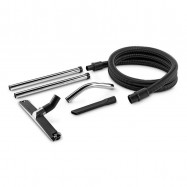
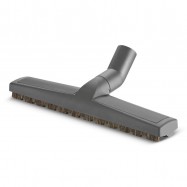
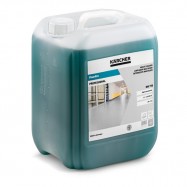
When does an escalator cleaner earn its place?
Escalators come last in the buying sequence for a reason. An escalator cleaner is a specialist piece of equipment, added last as noted above. For cleaning professionals bidding on retail or transport sites, the decision depends on three things: method, compatibility and safety.

Check the contract and cleaning method
These machines clean the grooves of escalator steps or travelator pallets, which ordinary floor machines cannot reach. If the contract only covers occasional escalator cleans, a machine may be hard to justify.
Methods also differ from one machine to another. One documented machine dry-brushes and recovers the soil by vacuum. Another design applies solution and then extracts it.
The method therefore has to suit both the machine and the site. Instructions written for a dry-brushing machine cannot be transferred to a wet-extraction design, so train operators on the specific model.
Confirm machine and site compatibility
Once the method is chosen, check the escalator itself. Confirm the tread profile, whether the risers also need cleaning, and whether the brushes are compatible with the guide combs. Then look at how the machine recovers loosened soil or applied liquid, especially where moisture could stay in the grooves or at the landings.
Approval comes before any trial. Get the site manager's or maintainer's agreement, and confirm the authorised method for operating or isolating the escalator. Access to both landings must also be confirmed.
Protect operators and the public
The trial then needs cable management, operator instruction and effective exclusion of the public. HSE identifies wet floors and cables as hazards created by cleaning. Keep pedestrians off a cleaned area until it is dry, or give them a dry alternative route. A warning sign alone does not do this.
Inspection duties sit with the escalator owner rather than the cleaner. HSE says LOLER does not apply to escalators themselves. Guidance normally recommends a thorough examination every six months, but this is not a LOLER inspection legally required at that interval.
What will equipment cost over a UK contract?
In commercial cleaning, the purchase price is only one part of what a machine costs. Professional cleaning services that win large contracts compare cleaning equipment by its cost over the whole contract. That includes the machine itself, its upkeep, and the waste it produces.

Compare purchase, lease and hire
Undated UK supplier guide figures give a starting point. Many pedestrian scrubber-driers sit at £2,000–£5,000, and a large ride-on example comes in at around £30,000. Treat these figures as indicative, not as current quotations.
The fairer comparison is cost per completed clean. Use measured labour time and add consumables, batteries, servicing, transport, downtime cover and temporary replacement. Hortech Cleaning offers purchase, low-cost finance, and long- or short-term hire.
| Option | Indicative cost | The right choice when |
| Pedestrian scrubber-drier, purchase | £2,000–£5,000 (guide figure) | Hard-floor areas are confined or split up |
| Large ride-on scrubber-drier, purchase | Around £30,000 (guide figure) | Routes are long and open, and access is confirmed |
| Short-term hire of a smaller machine | Per hire agreement | Routes are fragmented or the contract length is uncertain |
As the table suggests, higher stated output does not always win.
Check the quotation and handover
Compare quotations on the same VAT basis. HMRC states that applicable goods and services have carried a 20% standard VAT rate since 4 January 2011. For machinery placed on the Great Britain market, GOV.UK says the amendment effective from 1 October 2024 extended recognition of CE marking indefinitely. Northern Ireland has different requirements. Ask for a Declaration of Conformity and English instructions. PUWER requires suitable, maintained equipment and adequately trained operators, and Hortech Cleaning provides site surveys, demonstrations, delivery, set-up and training.
Budget for upkeep and waste
Once a machine is in service, running costs build up. Add these items to the acquisition price:
- Consumables: detergent, pads or brushes, squeegee lips, sweeper filters and vacuum bags.
- Power: batteries and chargers.
- Storage and end-of-shift care: emptying and rinsing tanks, then cleaning debris, brushes, filters and squeegees as instructed.
Emptying the tanks raises the question of where the water goes. Confirm a permitted disposal point first, because scrubber-drier wastewater should not go straight into a drain. In England or Wales, a discharge to the public sewer that counts as trade effluent may need consent.
Waste removal has its own rules. Before removing a client's waste in England, check which waste-carrier registration category applies. For transfers in England or Wales, confirm that the recipient is authorised. Keep non-hazardous transfer descriptions for two years and hazardous-waste consignment notes for three years.

Spread the cost of kitting out a contract
Low-cost finance, purchase hire and long or short-term machine hire are available on our Kärcher and Nilfisk scrubber dryers, sweepers and vacuums.
Frequently Asked Questions
Professional cleaners use detergents for cleaning and a suitable disinfectant only when the hygiene task requires it, applied to a properly cleaned surface as its label directs. Chemical-resistant gloves are chosen from the COSHH assessment and the safety data sheet, along with eye or foot protection where the task needs it. Steam cleaners, upholstery cleaners and tile-and-grout cleaners cover more specialised jobs.
Undated UK guide figures put many pedestrian scrubber-driers at £2,000–£5,000 and a large ride-on at around £30,000. These are indicative, not quotations. The former Enhanced Capital Allowance scheme ended on 1 April 2020 for companies and on 6 April 2020 for unincorporated businesses. Check whether you qualify for the Annual Investment Allowance instead.
No universal statutory interval applies. Under HSE guidance, a formal inspection is needed where installation, deterioration or exceptional circumstances could create significant risk, and its frequency follows the risk assessment. Keep the result until the next inspection. Annual PAT testing is not a universal legal requirement, but electrical equipment must be kept safe through checks based on risk and use.


