 reviews -






The best cleaning products for professional cleaners are the ones matched to the surface, the soil and the scale of the job. Kärcher floor machines, specialist machines and chemicals each suit specific tasks, and compatible spares and a work-ready kit keep them productive, with GBP prices drawn from the Hortech Cleaning range.
Which Kärcher floor machine suits each hard-floor job?
Floor care is where your equipment choice has a direct effect on labour time. The right tool depends on three things: the floor finish, the area you clean and how much soil you face. A small office corridor and a logistics warehouse call for very different Kärcher professional cleaning equipment, from a mop to a ride-on scrubber dryer.

Daily mopping or a scrubber-dryer?
For light daily soil in small or obstructed spaces, a flat microfibre mop and measured solution are often enough. Once the floor grows larger and stays compatible, a scrubber dryer brushes the surface, dispenses solution and recovers the dirty water in one pass. Before choosing that professional cleaning equipment, check the finish, cleanable area, turning space, water and drainage access, recovery performance, noise, operating hours and cable or battery needs.
Moisture level matters as much as the machine. The best cleaning products for mopping floors depend on the finish: sealed wood needs a wood-compatible floor cleaner and minimal moisture, while compatible sealed vinyl can take a neutral detergent.
Match machine size to the floor
Hortech Cleaning offers the Kärcher B 95 RS stand-on scrubber dryer, configurable with roller or disc heads and a working width of up to 75 cm. For larger sites, the compact ride-on B 90 R Adv Dose comes with several head and width options. The battery-powered B 150 R covers areas of 3,000–6,000 m². The B 250 R handles maintenance and polishing on areas up to 12,000 m², again with roller or disc heads.
A scrubber dryer is not the only floor machine you may need. A single-disc machine handles periodic scrubbing, polishing or suitable stripping, while the scrubber dryer combines agitation with water recovery. In practice, deep cleaning with a single-disc machine also means planning for slurry recovery and rinsing afterwards.
Choose brushes and pads by finish
Once the machine is chosen, the head fitted to it determines the result. Brush pressure, pad abrasiveness, detergent chemistry and water recovery all play a part. An overly aggressive pad can damage a floor finish, so start with the softest option that removes the soil.
Hortech Cleaning stocks Kärcher disc brushes for each level of work: a medium red 330 mm brush for scrubbing, a medium-hard red 510 mm brush for routine cleaning and a very soft white 510 mm brush for sensitive floors and polishing.
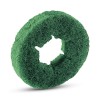
Pad work follows the same logic. Quick-change pad holders come in 355 mm and 479 mm sizes, both with central locking. A soft-medium red 508 mm pad suits wet cleaning, while a medium-hard green 508 mm pad tackles stubborn soil. Hard green roller pads come in packs of 20 and need a suitable pad axle.
| Kärcher brush or pad | Size | Typical use |
| Red disc brush, medium | 330 mm | Scrubbing |
| Red disc brush, medium | 510 mm | Routine cleaning |
| White disc brush, very soft | 510 mm | Sensitive floors, polishing |
| Red pad, soft-medium | 508 mm | Wet cleaning |
| Green pad, medium-hard | 508 mm | Stubborn soil, deep cleaning |
| Green roller pads, hard (pack of 20) | — | Stubborn soil, needs a pad axle |
What is a scrubber dryer?
A scrubber dryer is a floor cleaning machine that puts down water and detergent, scrubs the floor with brushes or pads, then picks up the dirty water with a squeegee and vacuum. The floor is left clean and almost dry in one pass.
Which Kärcher machine suits specialist cleaning jobs?
Beyond hard floors, most commercial cleaning contracts include carpets, spills, detail work and outdoor areas. Each of these needs a different machine category: vacuums, extractors, steam units or pressure washers. In each category, the hazard and the material decide which machine is suitable, not just how much power it has.

Vacuums for dry debris and spills
A commercial dry vacuum should be chosen on several criteria rather than on suction alone. Spare-part supply matters as much as performance, because a machine without available bags and filters stops earning.
The dust you collect also determines the machine. A standard commercial vacuum cannot be assumed suitable for asbestos, silica or other hazardous dust: the hazard sets the required machine and filtration configuration.
- Site fit: floor type, workload, noise and cable reach.
- Collection: filtration level and the floor tool supplied.
- Supply: availability of replacement bags, filters, hoses and nozzles.
A wet-and-dry vacuum extends the same idea to liquids. It recovers permitted dry debris and liquids, yet it is not automatically suitable for hazardous dust, flammable liquids or every spill.
Carpet extraction and steam detail work
A spray-extraction machine applies solution to compatible carpet or upholstery fibres, then extracts it with the loosened soil. The textile, its backing and the drying time available decide whether the method fits. On a large carpeted area, compare tank capacity, recovery, hose reach and refill frequency, because excessive wetting or poor extraction leads to slow drying, odour and moisture damage.
Steam suits a different task: detail work on heat-tolerant hard surfaces. Steam alone does not prove a hygiene outcome or disinfection. Hortech Cleaning offers the Kärcher SGV 8/5, which combines steam cleaning and wet vacuuming with seven operating modes.
Pressure washers for outdoor surfaces
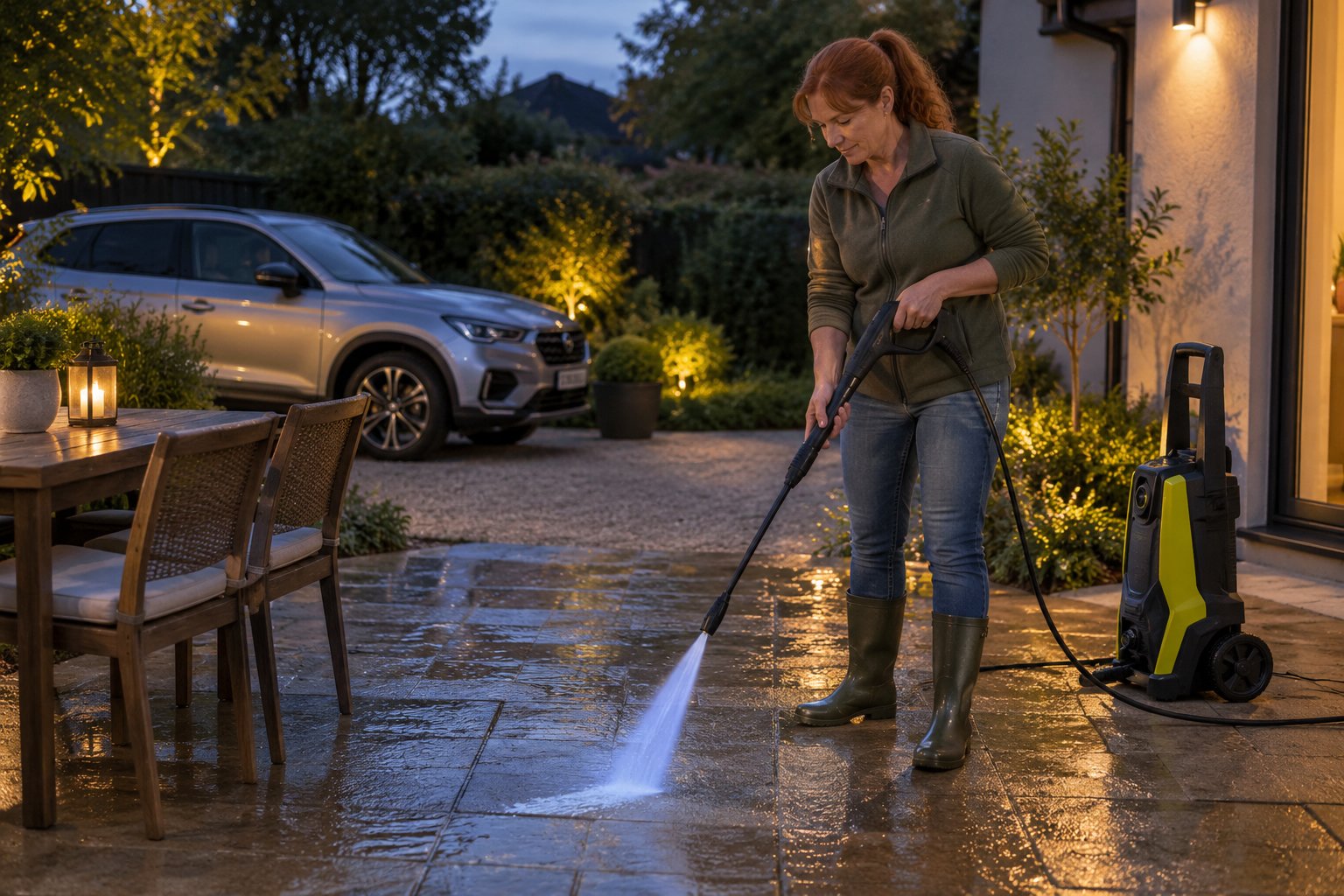
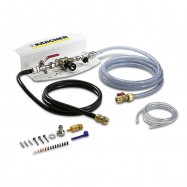
Professional pressure washers use the impact and flow of a water jet to dislodge soil from compatible exterior hard surfaces, vehicles and equipment. Pressure by itself does not guarantee a hygiene result. The difference comes down to the accessory: choose the lance, nozzle or surface cleaner by checking pressure rating, connection type, flow requirement and permitted accessories, alongside a detergent from the range of professional detergents suited to the substrate.
Before you start, plan around drainage, runoff, overspray, and electrical and spray hazards. Excessive pressure can damage mortar, coatings, timber, seals and soft stone, or force water into a building.
How do you choose Kärcher spares and accessories?
A machine is only as available as its spares. Ordering the wrong part costs downtime, and worn parts left in service affect both results and safety. Three habits keep your cleaning equipment working: identifying it precisely, stocking wear parts and inspecting it before and after each job.
Check compatibility before ordering
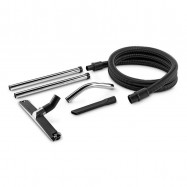
Record each machine's full model designation, order number and serial number before choosing critical spares or accessories. Domestic and professional fittings are not interchangeable by default. Brushes, pads, squeegee blades and attachment kits should also be checked against the exact machine, the flooring, the soil, the cleaning objective and the connection size.
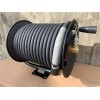
Pressure hoses show why these details matter. The Kärcher Longlife 400 hose, part 6.110-038.0, from Hortech Cleaning is 10 m long with a DN 8 bore. It has an AVS gun connection and EASY!Lock screw fittings. Never use a damaged pressure hose or improvise a pressure-rated connection.
Keep wear parts ready
Keep a spares stock specific to each machine: filters, bags, seals, hoses, brushes, rollers and squeegee blades, plus a backup for any attachment essential to recurring work. Worn squeegee blades leave dirty solution on the floor, which increases residue and slip risk. A blocked vacuum filter reduces airflow and strains the motor. Small parts are inexpensive: a replacement EASY!Lock O-ring kit costs £6.00 including VAT, from the cleaning equipment spares and accessories range.
Protect uptime and control costs
Before use, inspect cables, plugs, hoses, connectors, guards and any visible damage, and take suspect equipment out of service until it has been repaired. HSE PUWER guidance requires suitable equipment, safe maintenance, and adequate instruction and training. After work, empty and clean recovery tanks, rinse systems where the manual requires it, clear brushes and store everything dry. According to HSE, UK law does not universally require annual portable-appliance testing, so your electrical checks should follow the level of risk.
Purchase or hire decisions follow the same discipline. Time setup, cleaning, recovery, emptying, maintenance and rework on a defined area and soil type. Hortech Cleaning offers demonstrations, short- or long-term hire, and workshop or on-site servicing, both for machines used every day and for occasional specialist jobs.
Recommended products
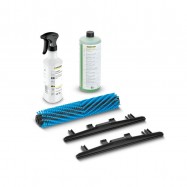
Which cleaning chemicals suit each soil and surface?
Chemicals complete what the machine starts. Choose them by the type of soil, the surface and the outcome you need, whether that is cleaning or disinfection. Products with similar names can behave very differently. Correct dilution and safe handling also matter as much as the product you choose.

Match the product to the task
Routine soil calls for a neutral floor cleaner or a compatible multi-surface all-purpose cleaner. Glass cleaner suits glazing and mirrors. A bathroom cleaner deals with everyday washroom deposits, and a toilet-bowl cleaner is used as its directions specify. Alkaline degreasers address kitchen grease, oils and fats, though they can damage aluminium and sensitive finishes. An acidic limescale remover suits compatible surfaces only, not acid-sensitive stone or cement-based materials.
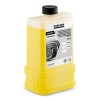
Industrial floors need heavier products. The Kärcher RM 69 Basic industrial floor cleaner tackles stubborn oil, grease, soot and mineral deposits. Its 20 l size costs £74.20 excluding VAT, or £89.04 including VAT. Hortech Cleaning also supplies FloorPro Industrial Cleaner RM 69 in 200 l for routine oil and grease in logistics and production settings.
Dilute concentrates accurately
Ready-to-use products, manual dilution, portion-controlled concentrated products and dosing systems differ in labour, waste and storage costs. UKCPI gives an example: one 5 l concentrate replaces approximately 500 typical 750 ml trigger bottles. It also avoids transporting more than a third of a tonne of water.
Accuracy depends on reading the label correctly. One part concentrate to 100 parts water makes 101 parts in total. By contrast, a 1% final solution needs 10 ml of concentrate in a 1 l batch, so follow the manufacturer's stated method. Use calibrated measures or a compatible dispenser, and check whether a machine's dosing setting refers to concentrate or prepared solution. Extra detergent adds residue, exposure and material damage without cleaning any better.
Check efficacy and chemical safety
Cleaning removes soil. A sanitiser reduces microorganisms to a safe level for the setting. The best cleaning products for disinfecting are matched to the target organism, surface, dilution and wet contact time. BS EN 1276 and BS EN 13697 provide specified test references for activity against bacteria, while BS EN 14476 addresses specified virucidal activity. Check which standard a disinfectant claims before adding it to your kit.
HSE COSHH guidance treats a safety data sheet as information, not as a task-specific risk assessment. Choose chemical-compatible gloves and splash protection by the assessed exposure, and read the label before using a specialist stain remover or solvent. Never mix bleach or any hypochlorite product with acids, toilet descalers or ammonia-containing cleaners, because hazardous gases can be released. Keep cleaning chemicals labelled, closed and stored apart from incompatible products.
Watch out
Using the wrong detergent in your machine
Products with similar names can behave very differently. Check that a chemical suits your Kärcher machine and the floor surface, and dilute concentrates accurately.
What cleaning supplies belong in a professional kit?
The machines and chemicals above work best around a standard core kit. If every team carries the same base supplies, restocking is simpler. You then add equipment for the jobs you actually take on, the requirements of each site and a budget based on the cost of the completed job.
A core kit for a cleaning business
For a cleaning business handling mixed domestic and light commercial work, the best cleaning products for a house cleaning business sit inside a practical starter kit. It should include colour-coded microfiber cloths, a mop and bucket, brushes, a squeegee, labelled spray bottles, a vacuum, a caddy, task-appropriate cleaners, gloves and waste bags.
Being equipped is not the same as being ready to work. A work-ready kit also needs the following items.
- Labelled containers: correctly marked for every decanted product.
- Dilution equipment: appropriate to the concentrates carried.
- Task-specific PPE and wet-floor signs: for staff and public safety.
- Safety data sheets: accessible to staff on every job.
Hygiene depends on how the kit is used. Keep clean tools separate from used ones. Change cloths and mop heads when they are soiled or when you move between designated zones. Follow the site's written colour-coding scheme rather than assuming one universal allocation.
Add tools for the jobs you accept
Expand the core kit only when the work requires it. Carpet extraction equipment, specialist cleaning products or floor machines belong to the jobs that need them. A small-space maintenance kit and a large-floor commercial cleaning kit therefore look quite different.
Window work is a clear example of a job-specific addition. Alongside a window cleaner solution, the tools you may carry include:
- Washer sleeve and T-bar: for applying solution to the glass.
- Squeegee with spare rubber blades: blade and technique suited to the glazing and seals.
- Scraper and telescopic handle: for stubborn deposits and higher panes.
Smaller accessories round out a janitorial cleaning kit: vacuum edge and upholstery attachments, replacement mop heads, grout brushes and extension dusters. They extend the kit's reach, yet they do not replace a machine chosen for the actual surface and workload.
Check site requirements and the buying budget
Some sites set the product choice for you. On food premises, the cleaning schedule must state what is cleaned or disinfected, how often and with which products. GOV.UK guidance advises checking disinfectant evidence such as BS EN 1276 or BS EN 13697. In healthcare, follow the facility's infection-prevention specification, approved products, contact times and verification. NHS England's National standards of healthcare cleanliness 2025 emphasise risk-based outcomes and staff training.
Plan your budget in GBP around the completed job, not just the shelf price of cleaning supplies. Include chemical and water consumption, consumables, labour, maintenance, storage, transport and repeat work. Compare a lean kit against one with extra machinery on that basis before you buy.

Kärcher Machines, Spares & Accessories
Browse Kärcher professional cleaning machines, spares & accessories online, with UK delivery or click and collect from Holbeach.
Frequently Asked Questions
Hiring often suits occasional deep cleans or one-off commercial jobs. Recurring work may justify buying, provided you account for maintenance, storage and transport. Compare setup, cleaning, recovery, emptying, maintenance, chemical and water use, rework and labour, not purchase price alone.
Not necessarily. A descaler does not automatically disinfect, and a degreaser is not necessarily a disinfectant. A surface that looks clean is not proof of disinfection. Remove heavy grease and dirt first where the disinfectant's instructions require prior cleaning.
Hortech Cleaning offers the Kärcher KM 70/20 C 2SB manual sweeper for both indoor and outdoor sweeping. It has two side brushes and is described as practically dust-free.